How To Be Promoted At Work: 7 Traits Employers Look For
 by
byTry When I Work for free

Do you wonder how to be promoted at work? Are there uncomfortable struggles between employees who think promotion is based on nepotism, longevity, hard work, favoritism, or various other standards? Does the whole thing make your head spin when you think about getting promoted from within?
Maybe your manager thinks promotion is just a job title, or that an employee will “grow into” the promotion. Promoting employees isn’t easy. Leaders can look for seemingly good indicators and then still get it wrong.

As you navigate through this article, you’ll uncover the essential traits that can significantly enhance your chances of getting promoted at work. Beyond just being a hard worker, you’ll learn the importance of adaptability, self-motivation, leadership, and the desire for continuous learning. Discover the holistic approach to standing out and moving up in your professional journey.
Key takeaways
- Promotion isn’t just about hard work; it requires a combination of work ethic, leadership qualities, and a genuine desire to learn and grow.
- Being adaptable to change and understanding job expectations are crucial traits for those aiming for a promotion.
- Effective communication, especially the ability to listen first and then respond, is a vital trait for leadership roles.
- Building genuine relationships and being truly engaged in your work can set you apart from others.
- Taking on additional responsibilities can showcase your proactive approach and readiness for promotion.
What it really takes to be promoted at work
Getting promoted isn’t about just doing your job well, it’s about showing that you’re already operating at the next level. To make the jump, you have to move to more high-impact contributions that align with your company’s strategic goals. This usually means focusing on more soft skills, like leadership and communication. You also need to show a consistent pattern of this behavior, building a reputation as the go-to person and making your aspirations clear to your manager and other leaders. Typically, it’s on you to show that the value you bring to the new position outweighs the cost of the transition of moving you and finding someone to replace you in your old job.
Why promotions don’t always go to the hardest worker
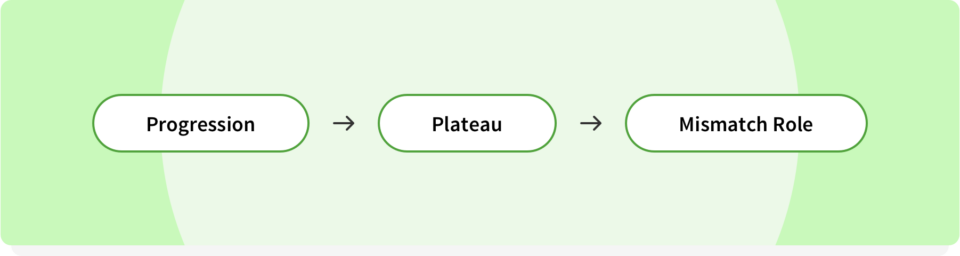
If someone gets promoted based on simply being a good worker, they’re going to crash headlong into the Peter Principle.
The Peter Principle is when someone is continually promoted until they hit the limits of their incompetence. At that point, they are no longer promoted and forever sit in a position they don’t do well at.
Basically, someone who is doing a great job in their current position might seem like a shoo-in for a promotion, but without core traits that are needed in higher-promoted positions, they may have simply been removed from a job they excelled at and put in one they are completely unqualified for. The best cashier might make a terrible shift manager. The short-order cook, who seems to handle incredible stress and fast-paced work, might fail miserably as a lead chef.
Not every good work skill transfers well into a promotion. And a lot of employers forget to train their employees to become good managers.
This is completely unfortunate for the person being promoted and those stuck beneath them in their final position. No one wins, everyone feels frustrated by the incompetence, and true skills are being wasted where they don’t fit.
Traits employers look for
Solid foundational traits are qualities that indicate suitability for a variety of jobs and, ultimately, a position of leadership. These traits push back against the Peter Principle.
As an employer or manager, you must be able to look beyond “she’s a good worker” and see the traits that will transition well into the promoted position.
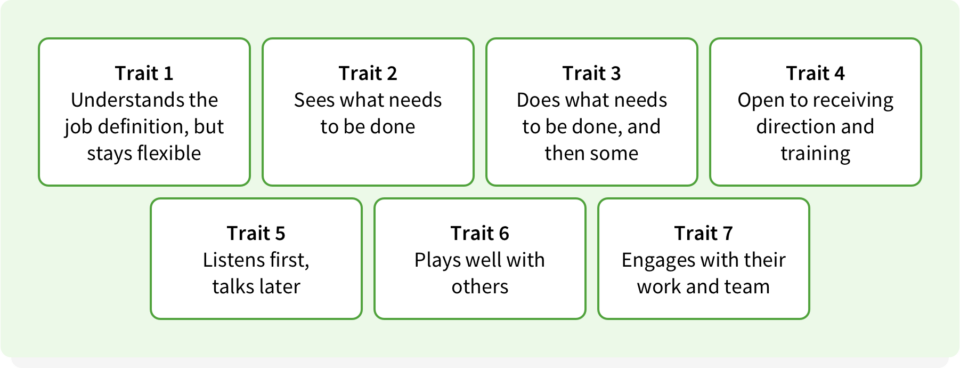
As an employee, displaying these traits clearly to your managers are how to get promoted.
Trait #1: Understands the job definition, but stays flexible
Understanding what is expected, but also being adaptable to change is a core strength of someone who is ready for promotion.
A good employee understands their job description and does it, but an employee who is ready for promotion is able to understand and adapt to situations that go beyond those boundaries.
The workplace changes. Operational goals shift. Employees come and go. Customer demand waxes and wanes. A rigid definition isn’t always feasible, and flexibility is vital.
Employees should be able to:
- adapt in their work without holding a grudge or complaining
- figure out a new system for getting the job done based on new expectations
- learn and grow from mistakes
Example: You typically work the morning shift, but you develop a new closing checklist that makes it easier for the late shift to get out on time, but still makes it faster for the early shift to open.
Trait #2: Sees what needs to be done
Self-motivation is made up of two parts. The first is being able to see what needs to be done.
There are two problems with that, the first being that employees that rely on being told what to do are unable to identify things to do on their own. That might work for a while, but for such people, once the list is complete, their job is done. Their work is always the minimum required, even if they work hard and do a great job with their assigned tasks.
- The first problem is how tiring it is to have employees that need someone to tell them every single thing that needs to be done. There will always be gaps. An employee who can see what needs to be done is able to spot problem areas in customer service or experience. It means they have a big-picture view that extends past job requirement expectations.
- The second problem in this situation is that employees who rely on being told what to do often don’t take responsibility for the outcome of their work. If something goes poorly, they can simply say that they were only doing what they were told. They have no ownership in what they do and how they do it.
An employee who has to have someone over them telling them what to do, no matter how great a worker they are, is not ready for promotion. Employees who can spot work that should be done, could be done, or areas where improvement is within their reach—noticing those areas and doing something about them, that’s how to get promoted. When someone solves a problem no one asked them to, employers pay attention.
Example: You’re a cashier, but when there’s no one in the line, you take the opportunity to straighten up the shelves around you or sweep the floor, even though it’s not in your job description and no one has asked you to do it.

Trait #3: Does what needs to be done, and then some
The second part of self-motivation is doing what needs to be done. Someone who sees what needs to be done but doesn’t do it is either purposefully lazy or prone to ordering people around.
In other words, identifying areas of improvement isn’t enough. An attitude of being willing to do the work is necessary to get promoted.
Why do some employees not do work they know should be done?
Maybe they think it is beneath them, or it is someone else’s job.
While there is validity in not doing other people’s work and meddling in everyone’s affairs, there are times when things need to be done for the sake of the customer experience or the bottom line.
This is directly tied into a work ethic that looks at work in a positive way instead of a means to an end. That is, an employee with this trait sees that work has its own benefit, and has an attitude that the goal is a successfully operating business or customer experience, whoever ends up making it happen. The flip side is someone who looks to do the minimum work possible to achieve the minimum results that would still be considered a completed job.
An employee who works to fill out the hours and get a paycheck is not promotion material. If you’re wondering how to get promoted, one simple way to start is to be an employee who exceeds work expectations for the big picture, whether the paycheck reflects it or not.
Example: You create a sheet of bar codes for the most frequently bought items, or you rearrange the POS so that those items are right up front, so it’s faster and easier for you and your colleagues to ring up customers and get them on their way.
Trait #4: Open to receiving direction and training
There’s a fine line between being self-motivated and being unwilling to take direction from a boss.
Consider that 58% of managers say they never received any training on how to be a manager. That’s pretty scary. Here’s the question for you: if you are willing to offer training and direction, is the person willing to receive it?
Being open to receiving direction and training is about having the right attitude.
It’s an employee who is always wanting to learn, instead of an attitude of knowing everything. They ask for input not because they’re afraid to work on their own, but because they value suggestions and are open to improvement.
A self-motivated person who isn’t open to training or suggestions is spurred on by thinking they know everything—acting like a know-it-all isn’t how to get promoted. Be someone who genuinely believes you have something to learn and can be redirected if you get off track.
Why is this a good trait for someone about to be promoted?
It’s because they never think they’ve arrived and sit back and stop growing. Instead, they are always looking to improve themselves, their work, and the same for those they will manage.
Example: You ask for feedback in a documented, structured way, that shows you’re consistently taking criticism and training and constantly striving to improve.
Related read: 7 Best Practices For An Effective Employee Performance Review
Trait #5: Listens first, talks later
Who doesn’t like someone who thinks on their feet?
Yet we often mistake a fast talker or quick responder to someone who thinks quickly on their feet when this is not always the case.

A fast talker, or someone who responds immediately to every question, does not necessarily indicate a fast thinker. It might simply be a case of someone who speaks before thinking things through. With that in mind, someone who doesn’t answer a question quickly doesn’t mean they are a slow thinker.
Managers and leaders are especially in need of great listening skills, for two reasons.
- The first has to do with building a team where everyone feels necessary. Whether or not a manager is learning from the person talking to them isn’t the point. Part of listening to people is to give them a chance to be heard and feel that they are a part of a team. Being a good listener adds value to a person’s self-identity.
- The second reason good listening is a required trait is the most obvious: that’s how you learn. Listening isn’t just hearing. It’s hearing, considering, thinking, and then responding or taking action.
Fast talking and thinking can be great, but cutting off fellow employees mid-sentence or blurting out the answers before anyone else, that’s a sign the employee is not ready for a promotion. They haven’t learned to lead others; they’ve only learned to put themselves out front.
Example: Whenever an issue arises, your first move is to always ask questions, not just make decisions.
Also read: 4 Types Of Management Styles: Which One Is Right For You
Trait #6: Plays well with others
Listening well segues into the ever-necessary need to be able to work with and lead a group of people.

You have to play well with others if a promotion is going to work out. Playing well with others involves:
- Good communication skills. Know when to talk. Know when to listen.
- Patience and tolerance of a variety of personalities. Empathy and understanding go a long way.
- Ability to lead unique individuals in a common direction. Being able to build a cohesive group out of individuals bouncing about like atoms is tough; it involves everything from compromise, cajoling, empowering, encouraging, and the tactful art of saying “no” without making it personal.
- Not looking out for Number One. While self-promotion and personal branding are lauded in this day and age, extreme levels of individualism don’t bode well in promotions that involve leading or managing teams.
While you want internal leaders to be strong individuals as far as creativity and related qualities, there is little chance that someone who is extremely individualistic in personality and contribution will succeed in a promotion. If narcissism and self-promotion are a characteristic of an employee, they aren’t ready for promotion, especially if the promotion involves leading a team.
Related read: The 12-Step Process For Improving Your People Management Skills
Example: You are the person that works well with everyone, and you are not well-known for being part of a clique.
Trait #7: Engages with their work and team
An engaged employee forms solid and genuine relationships with those they work with. They take and receive advice. They participate in all things surrounding their job and place of employment. They offer input when asked.
In other words, being an engaged employee who actually cares is how to get promoted.
In the opening paragraph, there was the suggestion that sometimes employers are careless with who they promote because they see it simply as a new job title with a few new responsibilities. The employee version of that mistake is seeing a promotion as more money and little more.
True engagement is about an employee’s motivation. Is it to make money or is it to be part of something that succeeds? Is it to have power and prestige or to lead others to success? Learn to spot a truly engaged employee instead of one who is simply actively looking for promotion and playing the right notes to get it.
Example: You genuinely know the people you work with and what motivates them to succeed, and you work that into every shift. You lift everyone up to have a better shift and the sales numbers prove that.
Show you’re promotion-ready by saving time building the work schedule every week. Start your FREE 14-day trial of When I Work today!
Common mistakes that prevent promotions
There are plenty of reasons why someone isn’t chosen for a promotion, but the most common ones are lack of visibility, poor communication, and no initiative.
First of all, if your manager isn’t aware that you want to be promoted, you may be completely off their radar. Be sure to talk about your aspirations to your supervisor, and get their advice on how to go about the process. If they know what you’re working toward, they’ll be more likely to keep you in mind when it’s time to promote someone.
That also means you have to work on your communication skills, to be able to have that talk with your supervisor. You’ll also need to be able to communicate really well with everyone in your environment, including coworkers and customers, to prove that you have what it takes to be promoted at work.
Plus, you have to be motivated. It’s one thing to talk about wanting to be promoted, but if you never do anything to try to show your value, then it’s never going to happen. You don’t get promoted just because you’ve been working in the same role for a long time (remember the Peter Principle?). You have to show that you have the initiative to work harder and prove you have the skills before you get promoted.
Ready to prove you’re promotion material?
Are you promotion-ready?
If you can answer yes to these questions, it might be time to talk to your manager about how to be promoted at work:
- Have you shown mastery of your job, but stayed flexible and adapted to change?
- Do you see what needs to be done (and handle it), even if it’s not in your direct job description?
- Do you regularly go above and beyond what is required of your job?
- Are you open to receiving direction and training?
- Do you listen first, and then talk?
- Do you get along well with your peers at work?
- Do you engage with your work and your team?
- Have you talked to your manager about your desire to be promoted and how you’re working toward that goal?
- Have you been working on your communication skills?
- Have you shown initiative at work?
How to talk to your manager about promotion
Collect some data to make your case, and then schedule a dedicated meeting to go over all of your high-impact contributions and how they’ve directly supported your company’s strategic goals.
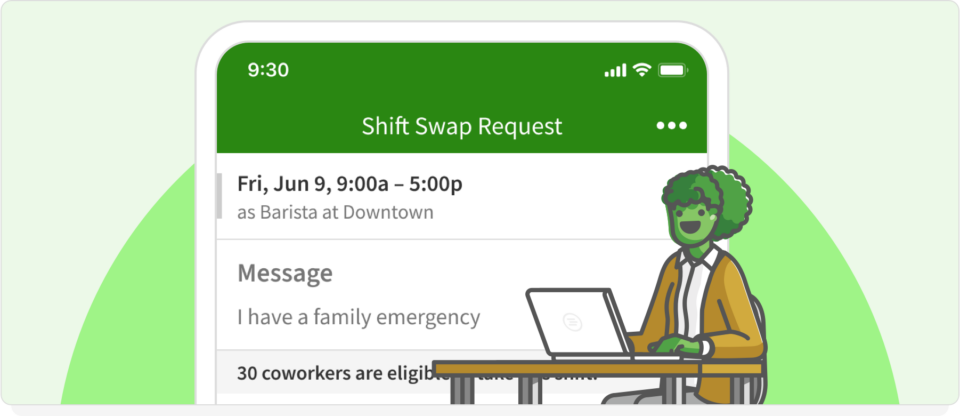
If you need a way to show your employers that you’re ready to be promoted at work, then take on the task of employee scheduling. Suggest a way to keep employees engaged and accountable for their shifts with scheduling software like When I Work. You’ll be going above and beyond by bringing a 14-day FREE trial so your managers can save time and money when building the work schedule. Sign up for your free trial today!
How to get promoted at work FAQs
What are the foundational traits that can help me get promoted at work?
Solid foundational traits include understanding your job definition while being flexible, self-motivation, leadership qualities, a desire for continuous learning, and humility.
How does understanding my job definition contribute to getting promoted?
Understanding your job description and being adaptable to changes beyond those boundaries show readiness for promotion. It demonstrates that you can adapt to shifting operational goals and evolving workplace dynamics.
Why is self-motivation important for promotion?
Self-motivated employees can identify tasks that need to be done without always being told. They often go beyond their assigned tasks, contributing more to the company and showcasing their potential for higher roles.
How can I showcase my readiness for promotion?
Display traits that are universal for leadership roles, such as a strong work ethic, the ability to lead and motivate a team, and a genuine desire to learn and grow. Taking on additional responsibilities, like suggesting improvements or tools, can also highlight your proactive approach.
Why is being open to receiving direction and training crucial for getting promoted?
Being open to training and direction shows a willingness to learn and adapt. It indicates that you believe there’s always room for improvement and that you’re open to feedback, which is vital for leadership roles.
How do listening skills play a role in promotions?
Good listening skills are essential for managers and leaders to build a cohesive team where everyone feels valued. It’s about hearing, considering, thinking, and then responding or taking action, ensuring effective communication and decision-making.
Why is it important to work well with others when aiming for a promotion?
Collaborative skills are crucial for leadership roles. Being able to communicate effectively, show patience and tolerance, and lead diverse individuals towards a common goal is essential for managing teams and ensuring a harmonious work environment.
How can I demonstrate engagement with my work and team?
An engaged employee builds genuine relationships, offers valuable input, and actively participates in all aspects of their job. Showing genuine care and motivation for the success of the business and its people can set you apart.
Are there tools or suggestions I can introduce to my workplace to show my proactive approach?
Yes, suggesting tools like When I Work for employee scheduling and team communication shows a desire to improve operational efficiency, which can indicate readiness for promotion.
How long does it take to get promoted at work?
There’s no definitive time frame in getting promoted at work. Because there are so many factors to consider, including how fast the company is growing and what their management needs are, how long it takes you to show you could be a competent leader, and how long it takes for your manager to make a decision and backfill your role, there’s no way to know how long it could take. The answer is that it depends on your current situation.
What should I do if I’m passed over for a promotion?
The first thing you should do is request a feedback session from your manager to discuss what happened and get a clear understanding of the skill gaps or performance metrics that led to the decision. Then you can use that information to create a plan to move forward, continuing to document your accomplishments and contributions so you have a rock solid case for the next opportunity.
How do I prove I’m ready for leadership?
Your best bet is to show through action that you prioritize the success of the group over your individual success. Try to work on some cross-functional projects that solve issues that are plaguing the entire team. If you’re a server, try partnering with someone in the kitchen to see if you can’t make the restaurant work more efficiently and effectively for everyone.
It’s also a good idea to look for opportunities to mentor junior staff members. Volunteer to train new employees and cross train in other areas so you can help out when needed. A manager has to be able to fill in all around the workplace, so showing that you also have that ability is another way to show you have leadership skills.