
Internal Communications: A 101 Guide for New Managers
 by
byTry When I Work for free

Think your employees are engaged at work?
You’re probably wrong.
A recent Gallup poll showed that nearly 70% of employees were anything but engaged at their workplace. Much of this problem has to do with how you approach internal communications.
So how do you get that 70% engaged? How do you get them to listen, to respond, and to care? You can use employee engagement activities to start. But here are some more specific communications ideas to help.
Table of contents
- What is internal communication?
- Why internal communication matters
- Common internal communication problems
- Best practices for internal communications
- Examples of good internal communications
- Tools that improve internal communication
- Internal communication FAQs
What is internal communication?
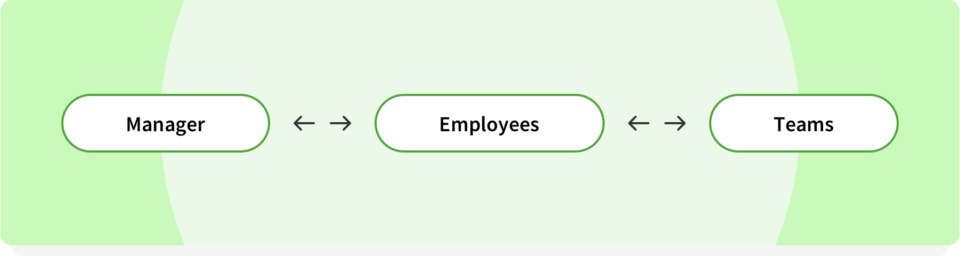
Internal communication is all the information that you send within an organization. There’s definitely a strategic approach to managing the flow of that information, to keep employees engaged, informed, and aligned with the goals of the organization.
Why internal communication matters
Imagine you work in a company with little to no internal communication. How are you doing at your job? What goals are you working towards? How was the onboarding process when you started? Without internal communication, you would have no idea how to answer any of these questions.
Types of internal communication
Internal communications can come from the top down, the bottom up, or cross-functionally from another team. But the main point is that these communications keep everyone at work informed of everything they need to know to be effective at their jobs, including:
- Company news and updates
- Culture and engagement
- Feedback
- Communicating in a crisis
- Operational tools and information
- Onboarding for new employees
Benefits of internal communication
Not only does good internal communication keep everyone on the same page and working together toward a common goal, but it also:
- Improves employee engagement
- Boosts productivity
- Increases retention
When employees know what they’re working toward and are bought-in on the goals, they’re more likely to work harder and stay on staff longer.
Common internal communication problems
First, you need to know where the communication ogres live.
Email everywhere
There’s the guy who uses reply all for everything, and the woman who forwards chain emails. There are inboxes bulging at the seams with emails for lunch orders, spam, lost and found notifications, important memos, client requests — all dumped in the same pile. Email use and abuse is a problem.

Struggles with document versions
Are documents are a big part of your employees’ work? We all shudder to think of email chains in which a version of a document is emailed back and forth and 50 emails later, no one is sure which is the most recent. Google Docs, Evernote, or Dropbox make document-centered communication and versioning much better.
No measurement is taking place
If you’re sending out internal surveys, are you tracking how many people reply? Do your emails seem to go into a black hole with no response? Do your memos die a lonely death in the breakroom? Track what works and what doesn’t.
Related read: The Best Team Building Games For Work
Best practices for internal communications
Use internal and collaborative chat systems, but do so wisely
The McKinsey Global Institute found that employees who are connected are 20-25% more productive.
Internal chat systems, like Slack, HipChat, or Google Hangouts make it easy for your employees to communicate back and forth effortlessly without the boondoggle of email chains.
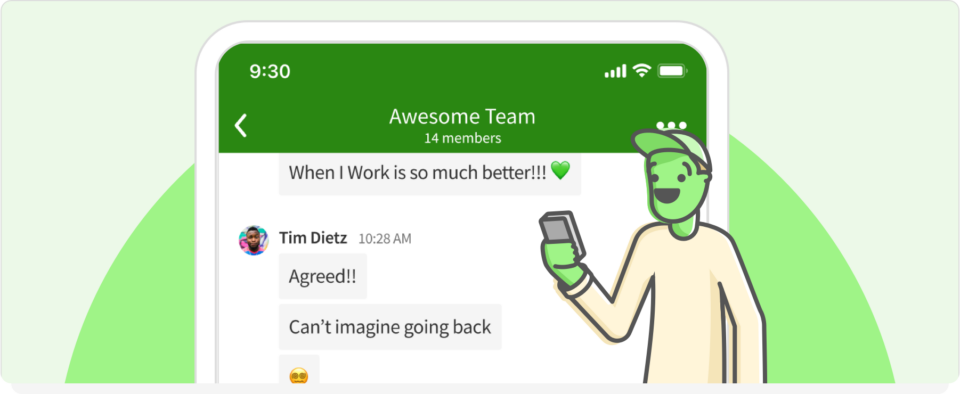
Granted, sometimes internal chat can go off the rails. Some employees might be tempted to spend their day sending GIFs and LOL cats to each other. Some might make secretive rooms where the discussion is inappropriate for work. It’s up to you to set the ground rules and tones for how internal chat systems are used, and monitor it accordingly.
Set some goals for what you want a team communication app to accomplish. It might be to reduce time spent in email by 25%. It might be to help everyone get to inbox zero. It might be to keep employees connected via mobile devices. It might be to simulate an office environment even for employees who telecommute.
No more missed calls, texts, or emails. Sign up for your free trial of When I Work today and see how using team messaging with your employee schedule can reduce no-shows and improve accountability.
All employee meetings are effective meetings
Meetings are to get things done, not waste time. How do you do that?

- Have an agenda and a goal. Know what the conclusion should look like or it never ends. Have questions that need answers that take you to the end goal.
- Avoid meetings that cover too much. Businesses with average performance tend to pack 40% more information in their communications. High-performance? They keep it short and sweet.
- Reduce the people involved. More people, more talking. Meetings should only involve those who absolutely need to be there.
- Don’t get too comfortable. Recliners and coffee are no way to run a short meeting. Consider walking or standing, especially if the meeting is to check in on a project or someone’s progress.
Also read: 4 Types Of Management Styles: Which One Is Right For You
Have policies for legal reasons
In a digital world, it’s easy for private or proprietary information to slip out. For this reason, you’ll want to have internal communication policies that have enforceable consequences.

This might include:
- Archiving. Depending on your industry, you may need to archive certain forms of internal communication for legal reasons.
- Employee issues. You will want to document and save internal communications, like an attendance policy, that might lead to employee reprimands, firing, or other legal issues. If communication was verbal, that policy will need to include noting the time and date, as well as summation, of conversations.
- Restricted use. You probably don’t want employees forwarding emails to each other that are offensive or not work-related, so have a policy that defines what is acceptable use on your communication systems.
- Privacy. You will want to have a policy regarding communication about customers, other employees, or internal issues that aren’t for public consumption (e.g. no screenshots, no forwarding internal emails outside of the company).
Don’t be a dictator about it, but do protect your employees, clients, customers, and company.
Use plain language, no matter what media format you use
Only 21% of communicators in the business world say they use plain language. That should make you cry a little.
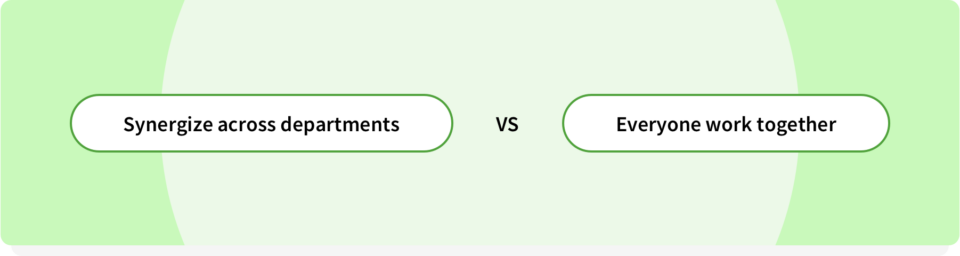
Whatever form of communication you’re using, speak in plain language. Skip acronyms. Avoid jargon. Flee from cliche. Plain language is language that is more concerned that the audience understands the information, and doesn’t worry about impressing people with big words.
Admit it: some leaders actually like to use language to make audiences feel less intelligent, too embarrassed to admit they don’t understand. Your goal is to communicate, not impress.
Think circular, and have an open door
Communication isn’t a one-way street. It’s a roundabout. That means that you communicate to your employees, and they do the same back to you.

How do you accomplish this back and forth communication?
Get rid of the management-centric “SOS” (Send Out Stuff) approach
Does your management simply broadcast information to employees, but never listen in return? The SOS approach ends up being lots of memos and meetings where employee responses are neither expected nor desired. Expect employees who aren’t engaged at all if management won’t listen or let them communicate back.
Make it safe for employees to communicate
Open communication sometimes needs to be anonymous or protected. Use internal surveys (avoiding 50-question behemoths), suggestion boxes, or whatever it takes to get your employees to respond. You need to know what employees have to say, even the quiet or hesitant ones who are easily over-powered by more talkative employees.
Exclusive meetings aren’t advertised
No doubt you have times when communication is need-to-know only, and employees are excluded, but there’s no need to be ostentatious about it, advertising to employees that they are being kept out of the loop. If you can’t be subtle about these meetings, at least let your employees know some basic information afterwards (“no, we aren’t firing anyone” or “the business isn’t closing down”). Secretive internal communication instills fear, distrust, and speculation. Employees shouldn’t find out about big internal news from external sources.
The trick to high-functioning internal communication isn’t gadgets and policies, though they may be a part of it. Instead, it is simply cutting past any ulterior motive and getting down to the most basic traits: clarity, sincerity, and efficiency.
Those three are your gold standards.
All internal communication action should be based on asking yourself if it gets you closer to or further from those three characteristics.
Examples of good internal communications
Communicate visually, including with video
Not everyone is a visual learner, but since most communication tends to happen verbally, visual learners get the short end of the stick. Videos and graphics can help.
- Training and how-to videos. Show employees how to do various tasks.
- Scenario videos. Show employees how to respond in different situations, including customer service, ethics, or culture.
- Company updates. Instead of a boring monthly newsletter or memo from on high, try using a video to show employees what’s happening in the business and in other departments.
- Personal growth. Use video to teach employees concepts on self-growth, workplace empowerment, or stress management.
- Highlight employees. Interview or feature different employees so your team gets to know each other and employees have a chance to share what’s important to them.
Videos, particularly if they aren’t heavily verbal or are done in a way that could be understood simply by watching, are an excellent choice if you have employees where English is a second language.
Tools that improve internal communications
Obviously communication tools are the first thing you think of, but other tools, like employee scheduling software, can really make communicating the work schedule so much faster and easier. That also means you’ll see more accountability, with reduced no-shows. Your employees will love having 24/7 access to the latest, most up-to-date schedule, and you’ll be able to save time every week. Sign up for your free trial of When I Work today and see how much it can help your team.
Internal communication FAQs
Q: What is internal communication in the workplace?
A: Internal communication in the workplace is the exchange of information, ideas, and even feedback between leadership and employees. Internal communication makes sure that everyone is on the same page when it comes to the company’s goals, objectives, and culture.
Q: Why is internal communication important?
A: It’s important because employees need that flow of information to build a culture of trust and to understand how their role is important to the company’s overall mission.
Q: What tools improve internal communication?
A: Emails, videos, newsletters, meetings, and tools all help improve internal communication. You can also use other software to improve communication, including employee scheduling software like When I Work. You’ll save time building the schedule each week, and employees will always know when they need to be at work.